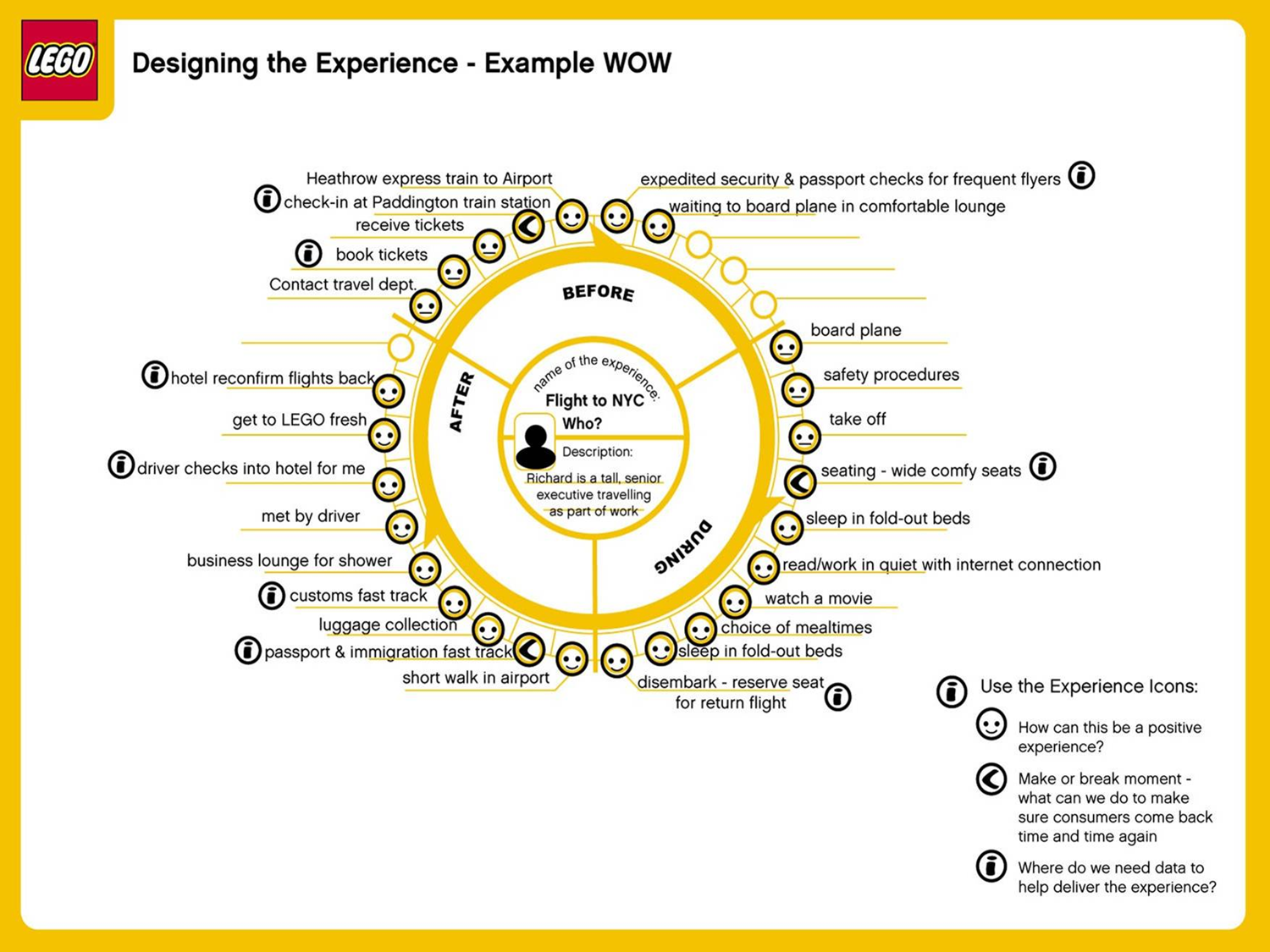
The Customer Journey Map is central to understanding and optimizing the customer experience. The purpose of the customer journey map is to visualize the interactions a customer has with a product, service, or organization. The customer journey map can be used to evaluate smooth and rough spots in the journey, and is powerful when generated in team brainstorming sessions through the end customer's perspective.
As I have been gearing up on the customer experience assessment approach, I scoured for great examples of what the customer journey map should look like. I was surprised that there seems to be no standard way to create the journey map.
While everybody seems to agree that the journey should include phases in a customer lifecycle. What the phases are called vary, and how many there are vary.
Some journey maps call out the interaction or touch points. Some journey maps take that a step further and also list out the channels supporting each touch point. Some journey maps ignore those, and instead focus on summarizing the customer activities, motivations, questions, and barriers per phase.
For the shape of the map, some journey maps are shown as a line that could cycle, while other maps are shown as a circle. Some maps are jagged lines sketched in pencil.
We decided to take components of many examples above to come up with our journey map visualization. In my experience, the critical pieces of information to reflect in a customer journey map include:
- Qualify which journey the map is meant to represent. Is the journey for a specific product or service, or is the journey similar across product and service lines? Who is the "customer" whose perspective was reflected in the journey? Was the customer an end buyer/user, a partner? Does the customer represented have preferences that are important?
- List all interactions the customer has on their journey not only with your organization, but also with your competitors. This is especially critical to uncover during the discovery/brand awareness phases, as your customer may interact with your competitors in a way your organization currently cannot support. Remember that from the customer's perspective, they are trying to accomplish something regardless of how you are able or want to deliver the experience.
- Identify the channels (i.e. mobile, web, phone, retail location) you have in place to support the interactions. It is important to understand that one interaction point may result in very different experiences depending upon the channel used to support it.
- Identify interactions which may result in a moment of truth, or emotional decision point, that will move the customer to the next phase in the journey.
- Apply health measures to each interaction point to understand whether the overall experience the customer has while interacting is consistently good, inconsistent, or consistently bad.
- Keep the people, processes, and technologies that are the backbone of each interaction as a companion to the journey map. These should be invisible to the customer on their journey.
The biggest challenge I ran into in creating a compelling and engaging customer journey map is to take a mountain of pertinent information and deliver it in a concise and readable format. Error on the side of simplicity. Speaking as one who loves technology, while it pains me to say so, I also recommend sticking with a whiteboard or pen and paper for the initial brainstorming. Don't get hung up on electronic visualization at first - be sure you can focus on capturing the spirit of the journey.